
Mining equipment plays a vital role in modern mining operations, supporting excavation, material transportation, roof support, and underground material handling. From mining transport vehicles to specialized lifting and conveyor systems, different types of mining equipment work together to improve productivity and maintain safe working conditions.
In coal mining operations, selecting the right mining equipment is particularly important. Machines must operate reliably in confined roadways, muddy conditions, uneven terrain, and potentially hazardous environments. Proper equipment selection can help mining companies improve transportation efficiency, reduce labor intensity, and support continuous mining operations.
For example, a typical coal mine excavation workface may require an explosion-proof diesel crawler transporter, an endless rope haulage system, a machine-mounted temporary roof support device, a self-moving belt conveyor tail, and pneumatic lifting equipment.
This article introduces five common types of mining equipment, explaining their functions, technical characteristics, and applications in modern mining operations.
1. Explosion-Proof Diesel Crawler Transporter
Un Transportador sobre orugas diésel a prueba de explosiones is a specialized mining transport vehicle powered by an explosion-proof diesel engine and equipped with a hydraulic crawler drive system.
Developed by Shandong Tianhao Technology Co., Ltd., this type of mining equipment is designed for transporting materials, mining components, tools, and heavy equipment in underground coal mine roadways.
Unlike conventional wheeled transport vehicles, crawler transporters use tracked running gear to distribute vehicle weight over a larger contact area. This reduces ground pressure and improves traction on muddy, slippery, and uneven surfaces.
Key Features and Advantages
- Multiple Payload Options: Available in different load capacities, including 3-ton, 5-ton, 7-ton, and 10-ton models to meet different transportation requirements.
- Lifting Arm Configuration: The described 5-ton model has a machine weight of approximately 5 tons and a rated payload of 3,000 kg. It is equipped with a lifting arm to facilitate the handling and loading of heavy materials.
- Compact Structure: Its relatively narrow overall width and compact design make it suitable for confined underground roadways.
- Hydraulic Crawler Drive: The hydraulic travel system eliminates the need for a conventional mechanical transmission gearbox, providing reliable operation and convenient control.
- Easy Operation: Hydraulic control levers allow operators to control forward movement, reverse movement, and steering.
- Excellent Ground Adaptability: Crawler tracks provide good traction and low ground pressure, making the vehicle suitable for challenging terrain.
- Reliable Hydraulic System: Hydraulic hoses and threaded connections simplify component installation, inspection, and maintenance.
The main transmission and hydraulic system components are sourced from established domestic and international manufacturers to support dependable equipment performance.
Typical Applications
Explosion-proof diesel crawler transporters are widely suitable for coal mine material transportation, equipment relocation, maintenance operations, and auxiliary transportation in confined roadways.
For mines that need to move heavy materials through narrow or muddy tunnels, crawler transporters offer a practical alternative to conventional wheeled transport vehicles.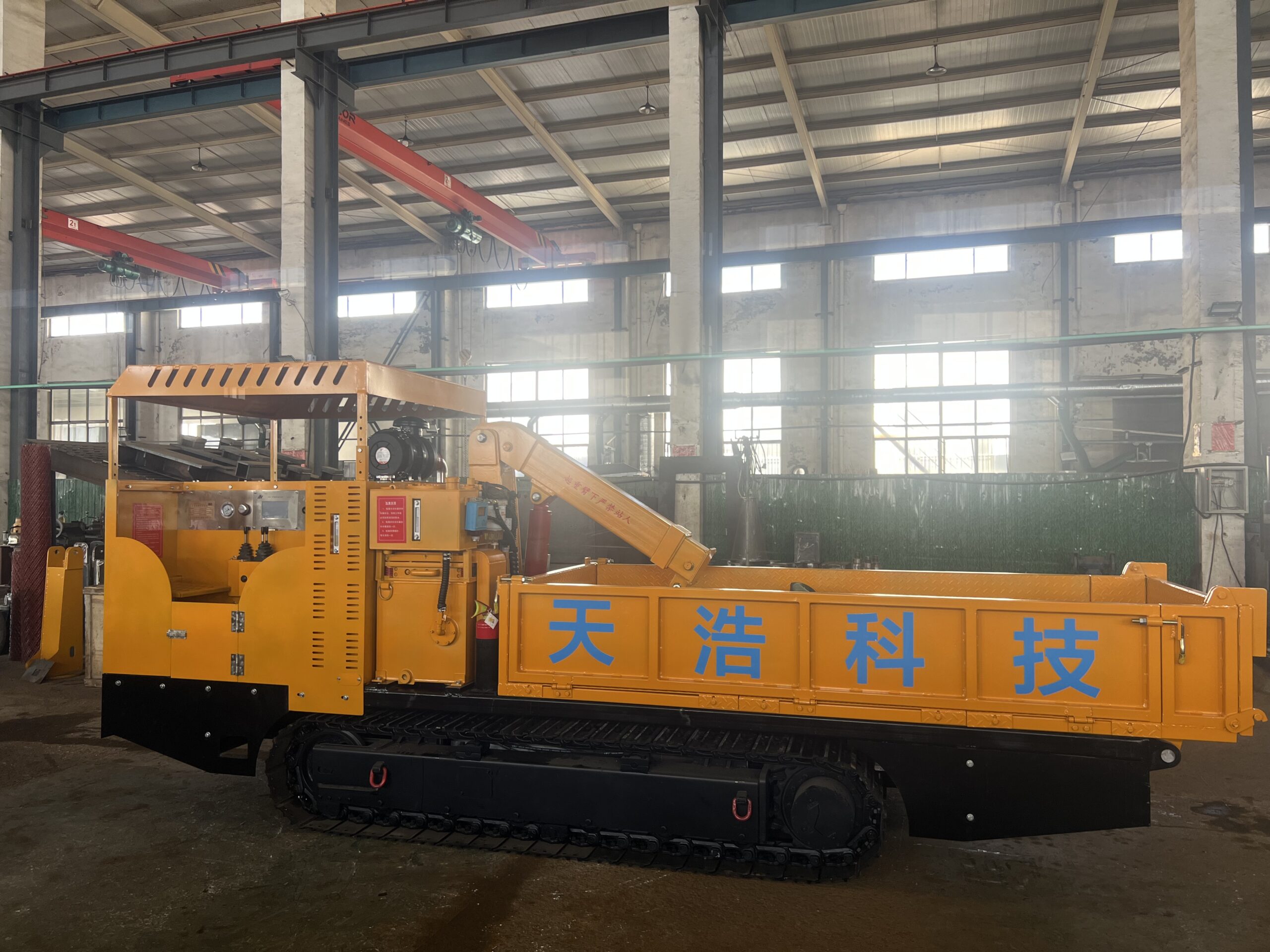
2. Endless Rope Haulage System
Un Endless Rope Haulage System is a rail transportation system that uses a continuously circulating steel wire rope to pull mining materials and equipment along a track.
It is commonly used in coal mines for long-distance transportation, particularly in roadways with steep gradients, multiple slope changes, and heavy transportation requirements.
Compared with conventional small winch relay transportation systems, an endless rope haulage system can provide continuous traction along the transportation route, reducing the need for repeated transfer operations.
Key Features and Advantages
- Long-Distance Transportation: Suitable for transporting mining materials and equipment over extended routes.
- Flexible Gradient Adaptability: Designed for roadways with large inclinations and multiple elevation changes.
- Heavy-Duty Transportation: Supports the movement of heavy mining equipment and materials.
- Reduced Transfer Operations: Enables direct transportation along the track, reducing intermediate handling and improving transportation efficiency.
- Improved Transportation Organization: Helps optimize auxiliary transportation systems and reduce dependence on traditional small winch relay operations.
Typical Applications
Endless rope haulage systems are suitable for:
- Coal mine working face roadways.
- Upper and lower mining district inclines.
- Main underground rail transportation roadways.
- Material and equipment transportation routes.
- Underground metal mine rail transportation.
They can also be used for ground and underground rail transportation in suitable mining environments. Certain systems are designed for track gradients below 18°, depending on the equipment configuration and operating conditions.
This equipment combines the practical experience of traditional endless rope winches with advanced rope-haulage technology, providing an effective solution for auxiliary transportation.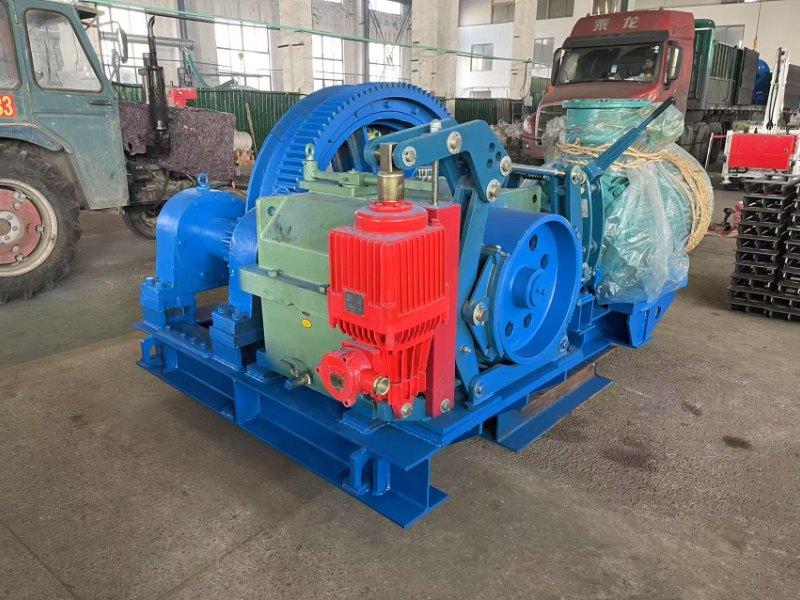
3. Machine-Mounted Temporary Roof Support Device
A Machine-Mounted Temporary Roof Support Device is a mechanical support system installed on the upper-middle section of a roadheader.
It is designed to provide temporary roof support during roadway excavation, helping protect workers from potential roof instability and falling rock hazards.
Traditional temporary support methods often rely on manually installed advance beams and support columns. These operations can be labor-intensive, time-consuming, and difficult to perform efficiently in confined environments.
A machine-mounted temporary support device integrates the support mechanism with the roadheader, improving the efficiency of temporary support operations.
Key Features and Advantages
- Integrated Installation: Mounted on the upper-middle section of the roadheader.
- Mechanical Support Operation: Reduces dependence on traditional manual temporary support procedures.
- Improved Work Efficiency: Helps streamline excavation and support operations.
- Reduced Labor Intensity: Minimizes manual handling and installation work.
- Enhanced Working Safety: Provides temporary support for the roof during excavation operations.
- Adaptability to Harsh Conditions: Designed for use in demanding mining environments.
Typical Applications
Machine-mounted temporary roof support devices are mainly used in coal mine roadway excavation projects.
They are particularly suitable for roadheader working faces where efficient temporary roof support is required during continuous excavation operations.
By integrating support functions with excavation equipment, this system helps improve the coordination between roadway excavation and temporary support work.
Note: Temporary support equipment must be selected and operated according to the mine’s approved ground-control design and applicable safety requirements.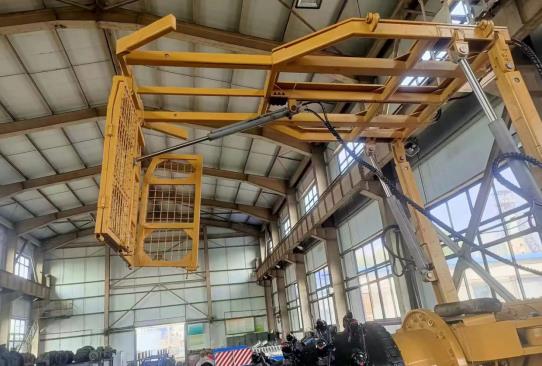
4. Self-Moving Belt Conveyor Tail with Remote Control
A Self-Moving Belt Conveyor Tail is a specialized material handling device used in fast-excavation working faces.
Its main function is to facilitate the rapid movement and accurate alignment of the belt conveyor tail with the roadway conveyor or transfer conveyor system.
In modern coal mining operations, excavation equipment and transportation systems must move forward together as the working face advances. Traditional manual conveyor tail relocation methods can slow down operations and increase labor requirements.
A self-moving belt conveyor tail provides a more efficient solution by integrating hydraulic movement, crawler travel mechanisms, and an electro-hydraulic control system.
Key Features and Advantages
- Self-Moving Function: Allows the conveyor tail to move forward as the excavation face advances.
- Hydraulic Power System: Equipped with a dedicated hydraulic pumping station.
- Crawler Travel Mechanism: Uses front and rear crawler assemblies to support equipment movement.
- Height Adjustment: Front and rear height-adjustment mechanisms help maintain proper conveyor alignment.
- Remote Control Operation: An electro-hydraulic control system enables remote equipment operation.
- Automatic Alignment Assistance: Supports conveyor deviation adjustment and straightening.
- High-Progress Excavation Support: Designed for fast-excavation applications with working face advance requirements of more than 80 meters per day.
Compatible Belt Conveyor Specifications
The equipment is suitable for belt conveyor systems with the following belt widths:
- 800 mm
- 1,000 mm
- 1,200 mm
Typical Applications
Self-moving belt conveyor tails are mainly used in coal mine fast-excavation working faces.
They help coordinate the movement of transfer conveyors and belt conveyor tails, reducing manual relocation work and supporting continuous material transportation.
For mines pursuing higher excavation efficiency, this equipment can improve the coordination between excavation, transfer, and conveying systems.
5. Pneumatic Hoist
A Pneumatic Hoist is a lifting device powered by compressed air. It is widely used in industrial and mining environments where reliable lifting and material handling equipment is required.
The HQ Series Mining Pneumatic Hoist is designed for demanding working conditions and offers several advantages, including a compact structure, lightweight construction, and resistance to harsh environmental conditions.
Compared with certain electrically powered lifting devices, pneumatic hoists can be suitable for applications where compressed-air power is available and the equipment is appropriately certified for the intended operating environment.
Key Features and Advantages
- Compressed-Air Powered: Uses compressed air as its power source.
- Compact Design: Its small overall size makes it suitable for confined working spaces.
- Lightweight Construction: Easy to install and arrange in different working environments.
- Resistance to Harsh Conditions: Designed to withstand dust, steam, and certain acidic or alkaline environmental conditions.
- Mining Applications: Suitable for material lifting and equipment installation in mining operations.
Typical Applications
Mining pneumatic hoists are used in coal mines and other industrial environments, including petroleum, chemical, textile, automotive, and shipbuilding industries.
In mining operations, they can be used for lifting tools, equipment components, and other materials during installation, maintenance, and repair work.
For underground coal mine applications, the hoist must meet the relevant explosion-protection and mine safety certification requirements.
6. Electric Hoists and Other Mining Lifting Equipment
In addition to pneumatic hoists, electric hoists are also commonly used in mining material handling and lifting operations.
An electric hoist uses an electric motor to drive a lifting mechanism, allowing operators to raise and lower loads efficiently.
Depending on the operating environment, electric hoists may be used in workshops, equipment maintenance areas, material storage locations, and other suitable working spaces.
When selecting an electric hoist for mining applications, buyers should consider:
- Rated lifting capacity.
- Lifting height.
- Power supply requirements.
- Operating environment.
- Explosion-proof certification requirements.
- Installation and maintenance conditions.
For hazardous underground coal mine environments, the equipment must be specifically designed and certified for the intended application.
How to Choose the Right Mining Equipment
Choosing suitable mining equipment requires more than comparing prices and technical specifications. Different working faces have different transportation, excavation, lifting, and safety requirements.
Before purchasing mining machinery, consider the following factors.
1. Working Conditions
Evaluate roadway width, floor conditions, gradients, turning space, humidity, dust levels, and other environmental factors.
For example, crawler transporters are suitable for certain muddy and uneven roadways, while rail-based haulage systems require compatible track infrastructure.
2. Transportation and Load Requirements
Determine the weight, dimensions, and quantity of materials that need to be transported.
The rated payload of a mining transport vehicle should be selected according to actual transportation requirements, roadway conditions, and operational safety limits.
3. Equipment Compatibility
Mining equipment often operates as part of an integrated production system.
For example, a roadheader, temporary roof support device, transfer conveyor, and self-moving conveyor tail must work together to support efficient excavation and transportation.
4. Safety and Explosion-Proof Requirements
Coal mines may contain methane gas, coal dust, and other hazardous conditions.
Equipment used in hazardous underground areas must comply with applicable mining safety standards and explosion-protection certification requirements.
5. Maintenance and After-Sales Support
Reliable equipment performance depends not only on manufacturing quality but also on maintenance convenience, spare parts availability, technical support, and operator training.
Choosing equipment with a practical maintenance structure can help reduce downtime and improve long-term operating efficiency.
Why Choose Shandong Tianhao Technology Co., Ltd.?
Shandong Tianhao Technology Co., Ltd. focuses on mining equipment and auxiliary transportation solutions.
For coal mining operations, selecting equipment that matches actual roadway conditions and production requirements is essential.
The company’s explosion-proof diesel crawler transporters are designed to support material transportation, with different payload options available to meet various mining applications.
Whether you need a 3-ton, 5-ton, 7-ton, or 10-ton crawler transporter, selecting the appropriate configuration can help improve transportation efficiency and operational flexibility.
When evaluating mining equipment, it is important to consider the complete operating environment, equipment compatibility, technical specifications, and applicable safety certification requirements.
Contact Shandong Tianhao Technology Co., Ltd. to discuss your mining equipment requirements and find a suitable solution for your mining project.
Frequently Asked Questions About Mining Equipment
1. What equipment is commonly used in coal mine excavation faces?
Common mining equipment includes roadheaders, explosion-proof diesel crawler transporters, endless rope haulage systems, machine-mounted temporary roof support devices, self-moving belt conveyor tails, pneumatic hoists, and electric hoists.
Each machine performs a different function in excavation, transportation, roof support, or material handling.
2. What is an explosion-proof diesel crawler transporter used for?
An explosion-proof diesel crawler transporter is used to transport materials, mining equipment, tools, and components in underground mine roadways.
Its crawler tracks provide traction on uneven and muddy surfaces, while the hydraulic drive system allows convenient movement and steering.
3. What is the difference between an endless rope haulage system and a crawler transporter?
An endless rope haulage system uses a continuously circulating steel wire rope to pull mining materials and equipment along a fixed rail track.
A crawler transporter uses its own crawler tracks and hydraulic drive system to move materials through suitable roadways.
The two systems have different infrastructure requirements and are suitable for different transportation conditions.
4. What is a machine-mounted temporary roof support device?
A machine-mounted temporary roof support device is installed on a roadheader to provide temporary roof support during roadway excavation.
It helps reduce manual support work, improve operational efficiency, and support safer excavation procedures.
5. What is the function of a self-moving belt conveyor tail?
A self-moving belt conveyor tail helps relocate and align the belt conveyor tail as an excavation face advances.
It uses hydraulic and crawler mechanisms to reduce manual movement work and support continuous material transportation.
6. What are the advantages of a pneumatic hoist in mining?
A pneumatic hoist uses compressed air for lifting operations. It offers a compact structure, lightweight design, and suitability for certain harsh industrial environments.
For underground coal mine use, the selected model must meet the applicable explosion-protection and safety certification requirements.
7. How do I select the right mining transport vehicle?
Consider the required payload, roadway width, floor conditions, gradients, turning radius, transportation distance, and applicable explosion-protection requirements.
For muddy or uneven underground roadways, a crawler transport vehicle may be a suitable option, provided its dimensions and operating specifications match the mine’s conditions.
Conclusión
Mining operations depend on the coordinated performance of excavation, transportation, support, and material handling equipment.
From explosion-proof diesel crawler transporters and endless rope haulage systems to temporary roof support devices, self-moving conveyor tails, and pneumatic hoists, each type of mining equipment contributes to more efficient and organized mining operations.
Selecting the right machinery according to working conditions, transportation requirements, equipment compatibility, and safety standards can help mining companies improve productivity and reduce unnecessary operational risks.
Shandong Tianhao Technology Co., Ltd. provides mining equipment solutions, including explosion-proof diesel crawler transporters in multiple payload configurations, to support the transportation needs of mining projects.
If you are looking for reliable mining equipment, contact our team to discuss your project requirements and equipment selection.
¿Cuáles son los valores que debemos tener para que nos ayuden a alcanzar nuestra misión y nuestra visión?
Lealtad | Integridad | Responsabilidad | Innovación pragmática | Buscar la excelencia
¿Tienes alguna pregunta?
Tanto si está planificando la adquisición de maquinaria de transporte para su próximo proyecto como si desea obtener más información sobre nuestras soluciones, estaremos encantados de responder a todas sus preguntas con todo detalle.
¿Necesitas un presupuesto a medida para tu proyecto de maquinaria minera?
Solo tiene que enviarnos sus requisitos a través de nuestro formulario de consulta y le responderemos a la mayor brevedad con una oferta completa y personalizada.