
Why Are More Mines Replacing Small Winches with a Mine Endless Rope Haulage Transporter?
In underground coal mine transportation, improving operational efficiency, reducing labor costs, and ensuring workplace safety have become major priorities for mining companies. As a result, more mines are choosing to replace traditional small winch relay transportation with a Mine Endless Rope Haulage Transporter.
This shift is driven by three major factors: transportation efficiency, operational safety, and long-term maintenance costs.
Traditional small winch transportation often requires multiple winches to operate in separate sections of an underground roadway. At each transfer point, workers must disconnect and reconnect hooks, switch winches, and coordinate signals before transportation can continue. The more transfer points involved, the more workers are required, and the greater the operational complexity becomes.
By comparison, a Mine Endless Rope Haulage Transporter uses a continuously circulating steel wire rope to move mining materials and equipment over long distances. This approach reduces intermediate transfer operations and helps create a more continuous and efficient underground transportation process.
So, why are more mines adopting this transportation solution? Here are five important reasons.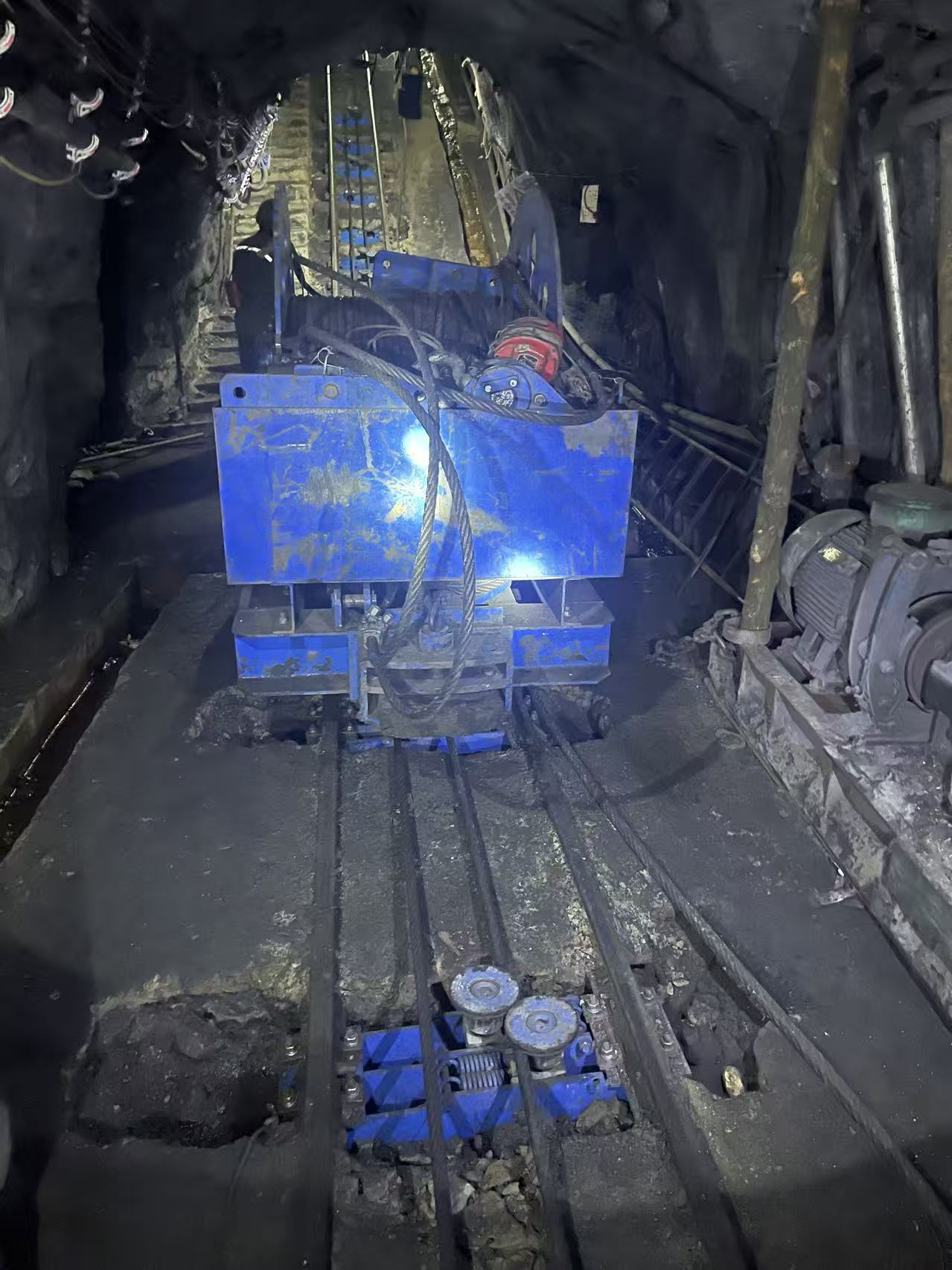
1. Reduce Labor Requirements and Operating Costs
One of the main advantages of a Mine Endless Rope Haulage Transporter is its ability to reduce the number of workers required for underground material transportation.
In a traditional small winch relay transportation system, multiple winch operators and signal personnel are usually needed to manage different transportation sections. Workers must coordinate each transfer operation, which increases labor requirements and creates additional management responsibilities.
A Mine Endless Rope Haulage Transporter can cover a longer transportation route with a single integrated hauling system, reducing the need for multiple independently operated winches and frequent manual transfer operations.
A practical example comes from the application of an endless rope shuttle car system at Jinneng Holding Bao’an Coal Industry Company in China.
According to the reported application data:
- The number of winch operators and signal workers required per shift decreased from 8 to 1.
- Labor requirements were reduced by 7 workers per shift.
- Annual labor costs were reduced by approximately RMB 300,000.
- Maintenance costs decreased by approximately 50%.
These figures demonstrate the potential economic benefits of replacing traditional small winch relay transportation with an integrated endless rope haulage solution.
Actual savings will vary depending on roadway conditions, transportation distance, operating schedules, and equipment configuration.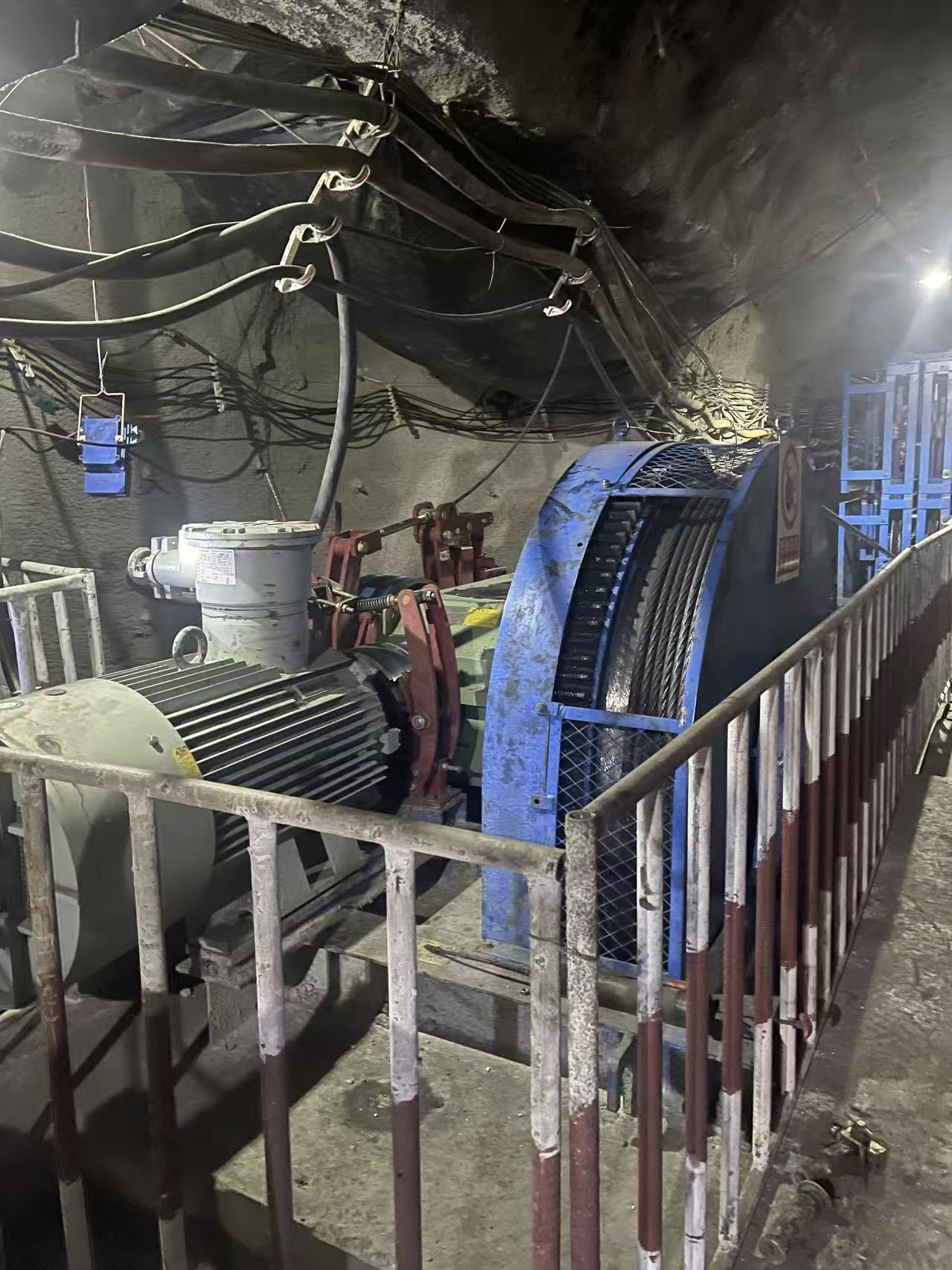
2. Improve Underground Transportation Efficiency
Transportation efficiency is another important reason why mines are adopting a Mine Endless Rope Haulage Transporter.
Traditional small winch relay transportation involves multiple operating sections. Materials and equipment must pass through several transfer points before reaching their destinations. Each transfer requires additional time for disconnecting hooks, reconnecting vehicles, switching equipment, and confirming operating signals.
These repeated procedures reduce overall transportation continuity and may create bottlenecks along the roadway.
A Mine Endless Rope Haulage Transporter uses an endless circulating steel wire rope to provide continuous traction along the transportation route.
Its main advantages include:
- Long-distance transportation: One integrated system can serve suitable long underground roadways.
- Fewer transfer points: Materials and equipment can be transported directly along the configured route without repeated intermediate transfers.
- Improved transportation continuity: Reduced equipment switching helps minimize unnecessary waiting time.
- Simplified operation: Fewer independently operated winches make transportation coordination easier.
For mines with suitable roadway layouts and stable material transportation requirements, this continuous hauling method can significantly improve underground logistics efficiency.
3. Improve Underground Mining Safety
Safety is one of the most important considerations when selecting underground mine transportation equipment.
Traditional small winch relay transportation involves frequent manual operations, including hook connection and disconnection, signal communication, and equipment switching. Every additional operating step creates another opportunity for human error.
A Mine Endless Rope Haulage Transporter can reduce some of these risks by minimizing intermediate transfer operations and centralizing transportation control.
Depending on the equipment configuration, the system can also be equipped with various safety and monitoring devices, such as:
- Overtravel protection: Helps prevent vehicles from exceeding designated operating positions.
- Overspeed protection: Provides protection against abnormal vehicle speed.
- Rope tension monitoring: Helps operators monitor the working condition of the steel wire rope.
- Signal communication systems: Improve communication between operators and relevant working positions.
- Emergency stop functions: Allow the system to be stopped when abnormal operating conditions occur.
These protective functions help improve operational control and reduce risks associated with underground material transportation.
However, safety performance also depends on correct equipment selection, installation, commissioning, regular inspection, and standardized operating procedures.
4. Reduce Equipment Maintenance and Downtime
When multiple small winches are used for relay transportation, each unit requires independent inspection, maintenance, and management.
More equipment means more motors, braking components, control systems, and mechanical connections that require regular attention.
If one winch fails, the transportation process in the affected section may be interrupted. In some cases, the entire transportation route can be delayed until the equipment is repaired.
By consolidating suitable transportation sections into a Mine Endless Rope Haulage Transporter, mines can reduce the number of independently operated hauling units and simplify equipment management.
Potential maintenance benefits include:
- Fewer separate winch units to inspect and maintain.
- Reduced maintenance workload across multiple transfer stations.
- Less frequent hook connection and disconnection.
- More centralized inspection of key mechanical and electrical components.
- Improved transportation continuity when the system is properly maintained.
The application at Jinneng Holding Bao’an Coal Industry Company also reported an approximately 50% reduction in maintenance costs after adopting the endless rope shuttle car system.
This illustrates how equipment integration can contribute to lower maintenance expenses, although actual results depend on operating conditions and maintenance practices.
5. Adapt to Suitable Underground Roadway Conditions
Although a Mine Endless Rope Haulage Transporter offers several advantages, it is not the only solution for underground mine transportation.
Different mines have different roadway gradients, transportation distances, cross-sectional dimensions, ground conditions, and material handling requirements.
For example:
- Mine Endless Rope Haulage Transporter: Suitable for underground roadways where continuous rope traction can provide efficient long-distance material transportation.
- Monorail systems: Can be considered where overhead transportation is suitable and roadway roof conditions meet installation requirements.
- Rack-and-pinion or rail-guided haulage vehicles: May be suitable for particular steep-gradient or specialized roadway conditions, depending on the system design.
- Explosion-proof underground rubber-tired vehicles: Can be considered for suitable trackless transportation environments where roadway space and ground conditions allow.
When replacing traditional small winches, mines should evaluate the transportation distance, roadway gradient, available space, daily transportation volume, installation conditions, and investment budget.
In some mining regions of China, including Shanxi Province, the transition away from traditional small winch relay transportation has also emphasized adapting equipment selection to actual mine conditions rather than applying a single solution to every mine.
The most suitable transportation equipment is the one that matches the mine’s actual operating requirements.
Mine Endless Rope Haulage Transporter vs. Traditional Small Winches
The following table summarizes the main differences between the two transportation methods.
| Comparison | Traditional Small Winches | Mine Endless Rope Haulage Transporter |
|---|---|---|
| Transportation method | Section-by-section relay transportation | Continuous rope traction |
| Equipment arrangement | Multiple independent winches may be required | Integrated hauling system |
| Transfer operations | Frequent hook connection and disconnection | Fewer intermediate transfer operations |
| Labor requirements | More operators and signal personnel may be needed | Potentially fewer operating personnel |
| Transportation continuity | Affected by equipment switching and transfer procedures | Better continuity along suitable routes |
| Maintenance management | Multiple independent units | More centralized equipment management |
| Safety management | More manual coordination points | Can integrate multiple protection and monitoring functions |
The actual performance of either system depends on mine layout, equipment capacity, roadway conditions, and operating procedures.
How to Choose the Right Mine Transportation Equipment
Before replacing traditional small winches with a Mine Endless Rope Haulage Transporter, mining companies should conduct a comprehensive evaluation of their underground transportation requirements.
The following factors are particularly important:
- Transportation distance: Determine whether the roadway length is suitable for an endless rope haulage system.
- Roadway gradient: Evaluate the maximum slope and changes in elevation along the route.
- Transportation capacity: Calculate the required load, vehicle configuration, and transportation frequency.
- Roadway dimensions: Confirm that the available roadway space can accommodate the equipment and its installation.
- Safety requirements: Check the required protection devices, monitoring functions, and applicable mine safety regulations.
- Operating costs: Compare equipment investment, labor expenses, energy consumption, and long-term maintenance costs.
A detailed assessment helps ensure that the selected equipment meets actual production requirements while avoiding unnecessary investment.
Frequently Asked Questions About Mine Endless Rope Haulage Transporters
1. What is a Mine Endless Rope Haulage Transporter?
A Mine Endless Rope Haulage Transporter is an underground mining transportation system that uses a continuously circulating steel wire rope to pull mine cars or specialized transport vehicles along a designated roadway. It is commonly used for transporting materials, equipment, and supplies in suitable underground mine environments.
2. Why replace traditional small winches with an endless rope haulage system?
The main reasons include reduced labor requirements, fewer intermediate transfer operations, improved transportation continuity, simplified equipment management, and potentially lower maintenance costs.
3. Can a Mine Endless Rope Haulage Transporter operate over long distances?
Yes. It is designed for continuous rope traction along suitable underground roadways. The actual transportation distance depends on equipment capacity, roadway conditions, rope specifications, system configuration, and engineering design.
4. Is an endless rope haulage system suitable for every underground mine?
No. Equipment selection should consider roadway gradient, transportation distance, available space, ground conditions, load requirements, and safety regulations. Other solutions, such as monorail systems or underground rubber-tired vehicles, may be more appropriate in certain operating environments.
5. What are the main benefits of replacing small winch relay transportation?
The main benefits include fewer manual transfer operations, reduced personnel requirements, improved transportation efficiency, more centralized safety management, and potentially lower equipment maintenance expenses.
Conclusion
The increasing adoption of the Mine Endless Rope Haulage Transporter reflects a broader shift in underground mine transportation from multi-stage relay operations toward more integrated and continuous hauling solutions.
By reducing intermediate transfer points, lowering labor requirements, improving transportation continuity, and simplifying maintenance management, this equipment can provide significant benefits for mines with suitable roadway conditions.
However, it is important to recognize that no single transportation system is suitable for every mine. A comprehensive assessment of roadway gradients, transportation distances, load requirements, and operating conditions is essential before selecting equipment.
For mining companies looking to improve underground logistics, a properly designed Mine Endless Rope Haulage Transporter can be an effective solution for achieving safer, more efficient, and more economical material transportation.
What are the values we need to have are to help us achieve our mission and our vision?
Loyalty | Integrity | Responsibility | Pragmatic Innovation | Pursue excellence
Do You Have Any Question?
Whether you’re planning mining haulage equipment for your next project or wish to learn more about our solutions, we are pleased to answer all your questions in detail.
Need a customized quote for your mining equipment project?
Simply send us your requirements via our inquiry form, and we will respond promptly with a comprehensive and tailored offer.